
By Philip Nothard, Customer Insight and Strategy Director – Cars, Cox Automotive
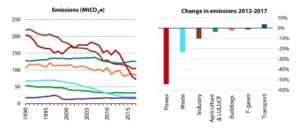
As recently as July, the government published its ‘Road to Zero’ plan which outlined the journey to its 2050 ambition plan of zero vehicle emissions, whilst in 2017 CO2 emissions rose for the first time.
So, what are their ambitions – are they realistic and achievable?
- 2030: 50-70% of new cars and up to 40% of new vans to be ULEVs (post 2020 = 50g/km)
- 2040: the majority of new cars and vans sold to be 100% zero emission and all new cars and vans to have a significant zero-emission capability
- 2050: almost every car and van to be zero emission
The government also announced that 100% of its leadership central fleet will become ULEV by 2030 and all charge points will become SMART.
This month the government announced that from 9 November plug-in hybrids (PHEVs) will no longer receive a subsidy towards the purchase price of a new car and those purchasing an EV (travel 70 miles or more on electric – Category 1) will still receive a subsidy Plug-in Car Grant (PICG) albeit reduced from £4,500 to £3,500.
Since the introduction of the grant in 2011, the government claims it has supported the purchase of more than 160,000 vehicles and indicates it will support the next 35,000 electric cars sold.
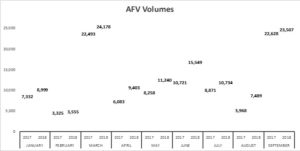
With the AFV sector accounting for 6.9% of fuel share in the September 2018 new car registrations, compared to 5.3% in 2017 and year-to-date 6.0% vs 4.6% in the same period 2017. With these reductions in grants, what will these growth volumes, notwithstanding minimal at 20,449 units YoY (+21.7%), look like for the year ahead?
How will impact the industry and is this strategically planned ahead of the forthcoming budget on the 29th October 2018 and what next for AFVs?
For more on the government’s plans click here: Road to Zero
